by meghanleborious | Jun 25, 2015 | Notes on Practice, Uncategorized
Hello world. Thank you, as ever, immensely, for your kind attention in reading these words. I love to write in this modality, and knowing that you are there to receive and respond gives it density—it helps me to show up for you (and for me) with all the commitment and integrity I am capable of. I am grateful to all of you for sharing in dance, for talking with me, for guiding me, for challenging me and for supporting me.
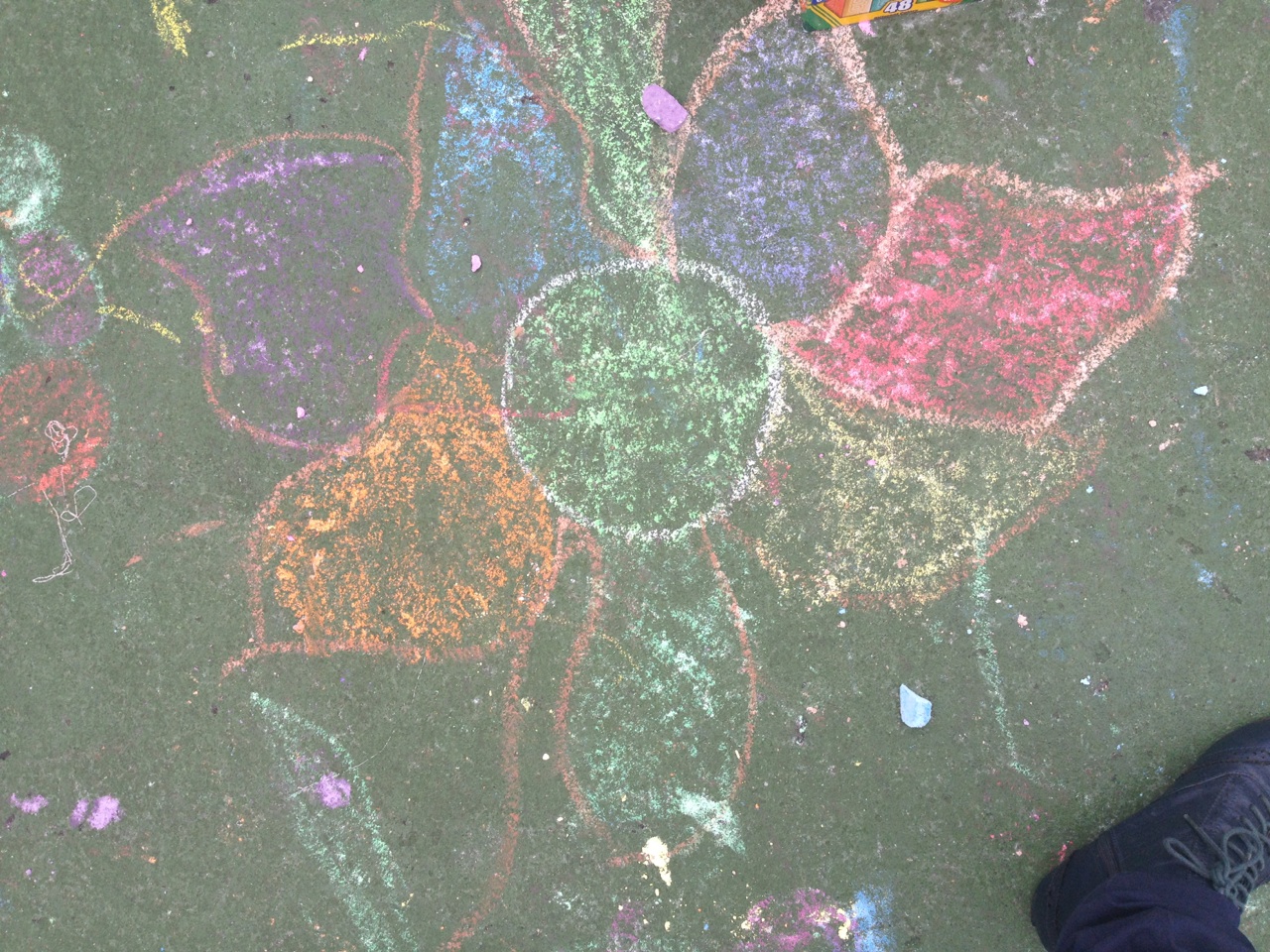
On Friday, Amber Ryan substituted for Tammy at Tammy’s Friday Night Waves class. Amber brings her own blend of insight, tenderness, sharp insight and vision; and I have benefitted from her teaching on and off the dance floor.
Before class, I had a very full day. After a long day at work, I had a fast swim. I also shared a full meal—which I rarely do right before a class—with my small son. I wasn’t sure how I would fare as the energy of digestion, combined with the longness of the day, affected my system. I need not have worried, as the collective enthusiasm swept me along from the moment I stepped in. “How happy are we that it’s summer?” Amber asked, and was greeted by cheers and enthusiastically bouncing bodies.
At one point in the class, Amber said, “I am going to ask a question that might not sound very…spiritual. The question is: What do you want?” Her voice was theatrical, tender, almost beguiling. The first thought that arrived was, “I want my son to be happy. I want him to live a long and happy life!” Then, I flashed on many of the things I want in my life, and noted that I already have most of them, or at least they are in some kind of process of becoming. At some point, I considered that what I most want is to be love, to manifest love, in everything, in every moment.
My cousin Alexis gave me a card for my birthday this year that said on the front, “Happy Birthday to woman who lives life her own way…” and on the inside it said, “boldly, lovingly, beautifully.” She said she read it and felt it was perfect for me. It made me cry. Sometimes I might feel small or mean or inadequate, but really what I really want, what really guides me, somehow was visible to my lovely cousin. Nothing less than the total expression of love, total uncompromising presence of heart. That is what I want. That is my truth. The star that guides me.
I thought about one of my Buddhist teachers, Sharon Salzberg, who, when clarifying a misconception about the concept of non-attachment, said, “We would all be well-served to think much bigger than we currently do.” I challenged myself to think as big as possible, even in terms of the concrete world. If anything were possible, what would I want? What do I want?
I had some insights that I will return to in the coming weeks. About work, for example, and how I am directing my resources. Also, I have to ask myself if I still want to “be a professional artist.” And, too, do I really want a certain kind of love? Part of me wishes for a partner, a consort, perhaps a soul mate, but part of me is in love with the world, with my life, with all of the creative activity I get to immerse myself in—and is hesitant to couple. Is that just fear? Do I want love love? That kind of love? More points to ponder. Thankfully, I will have hours and hours this summer to contemplate, meditate, make and release.
I have had a stress fracture in my foot that since the More Than This workshop in April that faded briefly, but returned again. Toward the end of the class, I took off the dance shoes I wore to protect the foot, and moved with mindful curiosity, taking care not to jar the foot and only bearing partial weight on it, easing my balance carefully with its health in mind.
My mother-in-law, who was a black woman from the south, possessed a resonant oratory style, abundant good humor and flawless dignity. Once, when we were together, we heard the song, “God, Won’t You Buy Me a Mercedes Benz.” I tittered. Having been raised Catholic, I always thought the song was tongue-in-cheek. You don’t ask God for a Mercedes Benz! You ask for world peace, an end of hunger, saint-like patience…something like that! But my very wise mother-in-law said, “Meghan, why wouldn’t you ask God for a Mercedes if that was what you really wanted?” She heard the song totally differently. The conversation opened a whole new line of questions I needed to pose to my mind. Why, indeed, wouldn’t you ask for a Mercedes?
What do I want? What do you want?
Amber played a dance remix of the Annie Lenox song with the lyric, “Sweet dreams are made of this….” She suggested that we think about what we want, and that we show it to others in the room. I lept into a gigantic dance with a friend who had just entered the class, bounding, spinning, emoting. In my head I said, “I see what you want! And I hope you get it!” I could feel her wishing the same for me. The beauty of un-conflicted, straightforward want is that it is, perhaps ironically, quite generous. When I want what I want, and I take responsibility for my wanting, I want you to get what you want, too. I don’t resent you for wanting, or even for getting. I even hope you get a Mercedes if that is what will make you happy! I carried the mantra around the room and repeated it in my mind to everyone I encountered,
“I see what you want! And I hope you get it!”
Happy summer, dear friends! May you live in the fullest expression of everything!
June 21, 2015, Brooklyn, NYC
This blog consists of my own subjective experiences on the 5Rhythms® dancing path, and is not sanctioned by any 5Rhythms® organization or teacher.
by meghanleborious | Jun 2, 2015 | Notes on Practice, Uncategorized
May 30, 2015, Brooklyn, NYC
The Mirrors level workshop More Than This, which was lead by Alain Allard April 15-19 in New York City, was exquisite. Remarkably, the feeling of it—of boundless, loving connection—lingered for days. Immediately after, I wrote feverishly, wanting to bring parts of the experience to readers, and, also, wanting to live it again through writing. However, through the guidance of mentors, I realized that I had shared too much in the text. Since nearly every practitioner entered into the construct with immense courage and vulnerability, it was not correct to reveal details about my experiences as they overlapped with the experiences of others, so I set about revising the text.
I woke up the day after the five-day workshop realizing that I had a foot injury, so I was obliged to, in the words of my five-year-old son, “take it down a notch with the dancing for awhile.” I have attended a few waves classes since More Than This; and noticed that part of me was comparing these brief classes with my experience of Mirrors. The intensity didn’t seem to compare to what I experienced during the workshop; and I found myself wishing I could live my entire life dancing the 5Rhythms for hours every day in community with like-minded practitioners. Weekly Waves classes, which had seemed a wide open magnetic field where anything could happen, suddenly seemed ho-hum; and my commitment and engagement diminished while I pondered how I could get back to the amazing space I had experienced.
Wednesday this week, I was off from work, and stopped into the YMCA for my daily swim. I ran into Jane Selzer, who teaches a 5Rhythms class at the same YMCA. She reminded me of the class in the course of our conversaton and invited me to stop by. She said, “You will probably be the youngest person there!” She added, shrugging, “It is just an hour class.” I rushed my swim and shower, and stepped into the studio a few minutes late with dripping hair and the lingering smell of chlorine.
As far as I know, no one in the class has ever attended a 5Rhythms class outside of the YMCA. Though everyone in the room seemed to know each other, they greeted me open-heartedly, if with some curiosity. Within the first few minutes, I was sobbing. I tried to hold back, thinking that as the newest dancer there I should try to be discreet. What I found there, just as I found in the More Than This workshop, was nothing less than beautiful humanity.
We do this thing, and it is really so simple. Jane provided a lot of structure and used the music skillfully to keep everyone moving, but really it was just a room, a group of people, some music, some words. We danced our hearts out, delighted with ourselves and with each other, soaring around the little studio, each in our own way. It is so simple, and yet it is everything, absolutely everything. Nothing less than the perfect expression of our total humanity. Nothing less than bliss.
As I cried, a waterfall of insights alit. I reflected that the “depth” I so crave—that I long for—is not something that anyone else can give me. It is not external. Highly skilled teachers like Alain and his wife and Assistant Teacher Sarah Pitchford can help to create ideal conditions, and Gabrielle’s maps can guide me, but really it is my own intention, my own awareness, my own integrity, my own discipline, my own patience, my own humility…that draws back the veils to reveal the depths of reality. If I fall into the trap of looking for it somewhere other than where I am, I am sure to sabotage myself, and to waste precious alive moments looking aimlessly for something that I can find everywhere, in every moment, in every experience.
As I write, I sit in my Brooklyn backyard. The soft hush of highway traffic enters my soundscape. Pipes music drifts to me from a distant backyard. The air is the perfect temperature for an early summer night, and, though it is late, the slightest tinge of dusk lingers. It is perfect. I notice it this time, thankfully.
To carry you back in time, on April 15th, the first day of the More Than This workshop, I made my way from the 8th Avenue subway station through the unpredictably organized streets of Manhattan’s West Village to Bethune Street, entered the building that holds the Martha Graham studio, and took the elevator to the 11th floor. I arrived over a half hour before the 1pm start time, but the foyer was already filled with dancers.
I think I spent much of the first day of the 5Rhythms Mirrors-level More Than This workshop trying to impress people. I especially hoped to impress the teachers, Alain and Sarah. I am not exactly sure what I hoped to impress them with—perhaps that I am a good dancer, that I am a good person, or that I am sensitive to the people around me. Alain is an acclaimed 5Rhythms teacher; with a worldwide reputation for his skill and insight.
I did not know the majority of people, as dancers arrived from all over the world, including one woman who traveled all the way from South Africa. Carving out the space from work and other responsibilities to attend the workshop felt like a soaring leap of faith for me, but I was humbled when I learned from how far and wide some had come.
On the first day, I danced myself empty.
Though I am not young, I am less practiced than most of the people who were in the room, and I felt possessed by youthful exuberance. My movements during this first wave of the workshop were expansive and creative. I slipped around people, and enjoyed a mutual head-cuddling spin with a friend. Alain’s refrain during this first chapter was, “We have plenty of time. Take your time.” I appreciate the perspective that we actually do have enough time, despite constant cultural pressure to believe that we are incorrigibly rushed.
After the opening wave, Alain sat us in a big circle to establish the parameters for the class. In this meeting, he asked people to reveal any type of connection—such as marriage, close friendship, or any type of investment in the practice, or even the fact of being a 5Rhythms teacher—and he asked us to leave those associations outside the room for the duration of time that we shared in the practice space.
Sarah led us through an investigation of the rhythm of Flowing—the necessary ground of all the rhythms. She was tiny and compact as she luxuriated on the floor, instructing us to investigate the lowest level (rolling on the floor), middle (rolling and slightly rising), and eventually the highest level (up, with attention to the feet and the ground) of Flowing. We moved as a group to one side of the room and then to the other as we attended to our assignment.
I recalled one teacher who led a meditation retreat I attended—a woman named Gina Sharpe. After a few days of intensive, silent practice I could scarcely bear to look at her. I almost felt I had to shield my eyes. I couldn’t believe that she was walking around the world shining so brilliantly, as she was. By the end of the first day of More Than This, I started to feel the same way about many of my fellow practitioners.
Entering the Bethune Street building the second day, the security guard was playing the House music ballad “A Lovely Day.” I had pressed the elevator button, but let it rise without me, dancing in the lobby instead. The guard told me that he loved the song, too. He had run an afterschool program for kids, and once had the kids perform the song, leaping in happy circles during the chorus, “It’s a lovely day.” When I finally got upstairs, I tried to tell someone about it, but choked up in the telling.
On the second day, the first wave danced me empty.
I noted construction sounds from outside, but regarded them as neutral. One of my first meditation trainings had a street construction soundtrack; and it had given me an opportunity to examine irritation and the insight that it lead to. The same day, Alain suggested that we consider it ok to be awkward. This, I also connect with that same meditation training, when I was raw, open, ethereal, and the teacher suggested that we might feel odd or awkward, and that we might experiment with letting that be—a suggestion that I have returned to again and again over the years.
Toward the end of the wave, I was drawn to the one place in the room where I could see the sky, and danced holding onto an edge, looking out the window. The 11th floor view and the vast space of the sky above New York City entered into me. I found myself weeping—porous, boundless, tender. When I turned my attention back into the room—a space I had previously perceived as a utopia—the room felt desolately confined. Grungy, semi-opaque plastic—coming down in the corner of one window—covered the windows on one side of the room. Our belongings—coats, bags, water bottles and assorted garments littered the benches on the same side. Most of the windows on the other side were covered with a tall, black velvet theatrical curtain. Materials and furniture seemed shoved into various corners; and the ceiling was worst of all. Shabby, with an array of stage lights—some with defunct bulbs. Snarls of black electrical cable snaked along the antique tin panels, held with various metal hooks and fixtures. I was heartbroken—to realize there was so much space available and yet here we were constrained in this tiny little room. I turned my attention back to the practitioners inside the space, and swept throughout, weeping as I gazed into people’s eyes, overcome by something there is no way to name.
I attend every workshop that takes place in New York City that I possibly can. Sometimes I show up without even knowing the workshop level or content and just follow the teacher’s lead. This time, I had a special intention. I was particularly eager to explore the map that Gabrielle Roth, the creator of the 5Rhythms practice, designed specifically for working with the machinations of ego—the Mirrors map.
The many different selves I have inhabited could stand some scrutiny. For example, there was a time when I feared I was evil, perhaps even a demon. I was deep in an underground culture at the time; and, though my conscience did struggle—I operated without basic integrity. It was a huge relief to me years ago to take on the belief of Tibetan Buddhist philosophy and psychology that there is no essential self, that we are all in flux, and that we exist only in relation to everything around us. I finally let go of the deep fear that I might be evil, since if there is no essential self, I couldn’t possibly have an evil essential self; and I came to believe that “me” was an act in constant creation.
An important part of the workshop was a specific process of supported, individual ego investigation that Alain designed in consultation with Gabrielle Roth. Most of the people in attendance embarked upon this individual process at some point during the workshop. I, myself, stepped into it on this second workshop day; and had a disconcerting experience. The final wave of the day found me dissociative and anxious—polar opposite to myself earlier in that same day when I gazed out the window and wept, letting the tenderness of vast space overtake me.
I wondered if I would be able to move at all on the third day of the workshop, suffering as I was. That night, I wrote several letters to Alain and slept restlessly. Though I did suffer, I was able to hold it within a larger space. I continued to feel disenchanted with Alain on some level, but I gave Alain and Sarah each a tiny daffodil in one tiny glass vase. Remarkably for me, I didn’t complain, I didn’t protest, I didn’t ask for validation of any sort. Sarah greeted me gently, and asked how I was. I replied, “Tender. Reflective. I might want to debrief with you or Alain about how that experience was for me at some point, but for now, I am going to just trust the process for a few more days.”
That day, I found expansive movement, creative specificity, connection and tenderness. At one point, Alain instructed us to sit and look into the eyes of another practitioner. I happened to pair with a good friend. I fell into his eyes, sighing, unpreoccupied with being seen, but instead simply seeing. Alain asked us to experiment with various levels of distraction as we sat together. The best I could do with his instruction was to imagine white clouds passing in front of my friend’s face, then to return to presence.
The only thing I wrote down that night was, “I didn’t care about the story. I gave Alain and Sarah each a tiny flower. The day was exquisite. Very very deep.”
A song from The 100,000 Songs of Milarepa—a saint of the Tibetan Kagyu lineage—with a verse about clouds and sky echoed through my mind. I sang it to myself on the subway and as I walked along the streets of the West Village on the way to the Martha Graham Studio the next day. Since the workshop, I taught it to my little son, and he and I have been singing it as a bedtime lullaby each night—a fitting relic of the workshop’s experiences.
Overall, the Mirrors map seems to align well with Buddhist psychology. Perhaps this was one of the draws for me, especially the emphasis on investigating the stories of who-we-are that we perseverate on and are limited by. The preoccupation with understanding the limitations of “self” within Buddhism correlates to the preoccupation with understanding the limitations of “ego” as Alain presented it to us. There is a lot of talk of “no-self” in Buddhism, but my current understanding of “no-self” is that there is, in fact, no essential self—no self that exists inherently, separately, but rather that the construction of self is a dynamic process that is interdependent with infinite factors.
Gabrielle wrote, “Our ego holds us back from actualizing our soul in artful living…The ego is often committed to negating our capacity for being, loving, knowing and seeing. Rather than healing, it can dismember us into a set of minor roles. We tend to take the roles we necessarily play in day-to-day living as the sum and substance of who we are, rather than as disposable character parts that we as sacred actors choose to play as circumstances require” (Maps to Ecstasy, 146). Anything that obscures soul is ego, as Gabrielle understood it. Although Buddhist teachings do not use the term “soul,” Gabrielle’s explanation of soul appears to be similar to Buddhist ideas about unmediated, loving, vivid presence.
What was disconcerting about the ego process as it unfolded for me was that Alain’s interpretation didn’t seem to have much to do with my personal experience. However, in the decision to let it ride and not to insist on “my story” I gained tremendous insight. I spent many years wallowing in my stories of personal trauma. At some point, they became so codified that I began to suspect their accuracy. The decision to let it go for the time being showed me, too, how even centrally-important stories that I have been telling myself for an entire lifetime, are actually quite arbitrary—perhaps just as arbitrary as any other possible story.
Most participants stepped onto the big dance floor at some point during the five days and entered into their own ego investigation. Many ended with cathartic tears and deep insights. It was very moving to witness and see people in their process, and to work at really seeing or really holding space, or noticing when I couldn’t. It was exhausting, too. The universality of the stories was notable. Most lead to some kind of fear or deep sadness. I was very touched by the way the men in attendance held space for one another and showed up for themselves—no small thing in a culture that puts men into a tiny little box where they must be brave, productive and one-dimensional.
There was a series of hip hop songs during the first wave of the next day. I danced hard, edgy, low—bursting and lurking, displaying and folding ardently and dramatically back in to myself. The lyric of one of the songs had the voice of a student talking to a teacher, saying you don’t really see me. I realized that I was dancing one of the high school students I teach (my favorite, I confess). I danced both him and me at once. At times, this student seethes with held-in anger. He told me once, “Teachers think we are all the same!” Dancing for him and as him, for me and as me—I thought about all the trauma we collectively hold, all the rage, all the injustice, and all the beautiful humanity.
We gathered to listen to Alain, and I sat on a large ball not realizing that the one pregnant participant hoped to use it to elevate her feet. I got up immediately and another friend joined me, each of us elevating one of her feet and offering a smiling foot massage. We were her doting attendants. On the last day, at one point the pregnant friend was left without a seat entirely. I stood up right away, and the same friend joined me in attending her. In silence, we retrieved the ball for elevating her feet and various other accoutrements, scampering quickly, in sync. We each elevated one foot once again, then took our seats. It was lovely to feel like I knew exactly what should happen and to just do it, without equivocation; and I loved that my doting friend was in the same space. This feeling persisted during the last three days of the workshop.
Occasionally, I am self-conscious about how I interact with people, but most often it is light background noise (What do they think? What do I think? Do I want to be in this partnership? Do they want to be in this partnership? I have to be careful not to hit them with my arm. I hope they don’t step on my foot or crash into me. I hope this dance ends. I hope this dance never ends…). For long stretches during More Than This, that activity ceased completely; and I moved in and out of close partnerships with poise and confidence.
A friend sent me an email, obliquely mentioning the death of another friend—she thought I already knew. I couldn’t take it in, and waited for a chance to ask someone to confirm that he had passed. I approached a friend who was seated on the floor shortly before we started again after lunch. “I got an email mentioning….is it true?” “Yes,” he said, “and he took his own life.” I let out a sharp cry. He also shared the news that Pat, an elder in the 5Rhythms community, had died. The full force of grief shot through me—lightning—coming from above and ripping through. He looked patiently at me as I cried out again, gutterally, explaining that the friend who took his own life had been ill, and had decided that it was his time.
I thought, as I often do, of my tender-hearted father. I was there when he got a call that a close friend’s daughter had been killed in a car accident and grief overtook him instantly. And again, when my deeply loved great-aunt, who lived two houses from my parents, died at home of congestive heart failure. The totality of grief seemed to strike him right away. It was the exquisite environment of the workshop that allowed me to experience grief so totally, myself. At other times, I might experience grief as shock and in fits and starts, rather than with the raw force that is its hallmark.
That night, I had to be home before eight, since my son’s father—my former partner—had to leave promptly to get to a DJ gig. I told him that I should be home long before eight—our agreed upon time. I walked in smiling at a quarter before eight, thinking he would be pleased that I arrived early. He greeted me with contempt and anger. (In my journal I wrote that he “ripped me one.”) “I have somewhere important to be! How can you say you will be here long before eight, then you just come fifteen minutes before eight! That is just like you! That is not long before! Don’t ever ask me to help you again. I made it clear that I have somewhere I have to be.” He repeated this refrain with increasing intensity while my five-year-old son clung to my leg. I said, “Don’t worry, little one. Daddy can’t hurt my feelings.” I turned to him and said, “I am very sorry I couldn’t meet your need this time. Believe me, I would like to meet your needs. But you are out of line right now. What you needed was not clear. I could not possibly get from the West Village to Brooklyn in less time.” He left, slamming the door. I turned to my son to play with him, barely ruffled. Daddy returned two minutes later, apologizing profusely. I told him, “I accept your apology. The truth is that you can’t hurt me right now.” I said, “I love you” as I hugged him good-bye; and he said, “I love you, too.”
Before we began on the last day of the workshop, I sat next to a large, metal coffee pot that was heating water for tea. I leaned into it, smiling, thinking that the steam inside it sounded like wind. Sarah joined me briefly, and we shared a discussion about the 5Rhythms practice and how transformative it has been for both of us.
The first wave of the day began and I could not stop thinking of what a blessing, what a miracle it is, to move, to live. Alain played a song from the 90’s that I connect with my 2nd and 5th lovers—both problematic exchanges; and I thought about entering the story of it. But there just wasn’t much juice. Layers of trauma appeared, sparked, then fell away.
I found a dance that let many stories arise—some mine, some not—find instant form, then be subsumed again in the massive spinning matrices of Chaos. A new friend witnessed me in a spinning, twisting, leaping representation of wild mind. As the wave progressed, the room was filled with soft intersections. I didn’t need any approval. I didn’t need to prove anything. By the end of the day, I found myself, again, boundless, porous—my entire body one gigantic, beating heart.
In my journal, I wrote, “I see I see I see.”
Alain was masterful. Sarah, too, was masterful, in the way that she supported and lead in her own right. The final circle was un-cathartic. I felt nostalgic as Sarah and Alain turned to gather their things to hurry off to the airport. People lingered at great length and drifted only very slowly to the street.
The day after the workshop, I was irritable, though the open-hearted blissful awareness that had arisen persisted for many days. This was not a surprise. I have had the experience many times that after my ego has unwittingly rolled itself back to show a little bit of what it obscures, the ego reels and clamps down again, trying to re-assert itself.
In Tammy’s class on Friday, I found freedom after an unbelievably stressful week—when it looked very possible that I might lose my job and I was also struggling to finish requirements for a degree deadline. In the teaching during the interlude between the first and the second waves, Tammy taught the rhythms for the benefit of first time practitioners. I closed my eyes, moved, as always, by the litany of the rhythms—the refrain that has guided me to the depths of myself, again and again.
-May 30, 2015, Brooklyn, NYC
by meghanleborious | Mar 24, 2015 | Notes on Practice
This blog consists of my own subjective experiences on the 5Rhythms® dancing path, and is not sanctioned by any 5Rhythms® organization or teacher.
Peter Fodera’s one-day Flowing workshop was held at the Paul Taylor Studio on the Lower East Side. I remember once during a class Tammy said that when she first met Peter, he seemed so divine she wasn’t sure he was actually of this world. I try to attend every teaching he offers in New York City and have always felt challenged, supported and inspired by him. It was my first time at Paul Taylor Studio, and novelty peaked my attention as I made my way in the door and up one flight of stairs to the foyer. The space struck me as clean and chic, with high ceilings, open stairs, translucent walls, and cut-out spaces for sunlight to move freely.
The rhythms of Gabrielle Roth’s 5Rhythms practice include Flowing, Staccato, Chaos, Lyrical and Stillness. Flowing is the first by design; and we are taught that Flowing is the essential foundation of every other rhythm. Its hallmarks are being aware of the feet on the floor or ground, unending circular motion, looking for and moving into empty space, in-breath, and an attitude of receptivity and curiosity.
After greeting many smiling friends, I stepped into the lovely studio, bowing as I crossed the threshold, as is my habit. The black floor was marked and scuffed in subtle, layered patterns that, upon inspection, seemed to have marble-like depth. Crossing the large black rectangle of the dance floor, I stepped into a balcony-like space with a white floor and an entire wall of curving windows that look onto the lower east side and the raised subway tracks peeking from behind a stand of tall buildings.
Martha Peabody had created an installation between the threshold of the two floors and facing onto the large dance floor. Its setting was rectangular, as well, and featured leaf-green netting over a soccer-goal shaped form and fabric of an array of shades and textures of green—the color associated with the rhythm of Flowing. On this foundation, Martha had placed a curving line of wooden shoe forms, mature plants potted in sculpted tins, balls of moss, candles and white roses. She also created perhaps a dozen little wooden stands, each holding a dense cabbage like a head manikin, and each topped with an exquisitely-rendered crown or headdress. Materials included antique clothespins, feathers, glitter, pearls, beading, decorative sewing pins, collected baby forks, a tiny bird, veils and paper lace. A special pussywillow crown had a place of honor on a small, wooden child’s chair in the middle of the installation in honor of Peter’s birthday.
Leading up to the workshop, I was nothing but eager. I noted that I had no ambivalence whatsoever about spending a day investigating the rhythm of Flowing. My one mild hesitation was that I wondered if a one-day workshop would allow time to both come apart and to re-member. I noted that I was a bit nervous about the possibility of coming apart without being able to work through it. In the past, I have only done three-day workshops or workshops that meet once a week for multiple weeks; and in most cases, the narrative arc of the workshop involved some kind of descent, unraveling or release, and then some kind of re-integration.
Peter’s choices of music made it easy to move; and I stepped directly into the river of Flowing—with seemingly perfect release, engagement and fluidity. I felt emotional and was moved by artistic visions, finding infinite new ways to move. I investigated the room, flowing into all its corners and looking into the high-above theatrical works. I felt like a spring stream finding its way downhill, rushing around rocks and fallen trees, swirling, crashing upward, falling back, and then being pulled forward with vigor. It is beyond joyful—these rare moments when movement is perfectly aligned with the inner and outer environments.
I anticipated that we would engage deeply with the “pure” rhythm of Flowing, as opposed to its shadow, but Peter had different ideas. When we say the “pure” rhythm, we mean the rhythm itself, when we talk about the “shadow” of a rhythm, we are talking about a face of the same rhythm that could be read as a different—or even as an opposing—aspect. For example, the pure rhythm of Flowing is Flowing; and the shadow of Flowing is Inertia.
Which is why the day before, when we had blue sky in New York, and a little kiss of spring, I said, “Yes! Let it in, let it in, let it in!” With in-breaths—with inspiration—with open arms, and with feet moving with gratitude on the soon-to-awaken earth. After a grueling winter with many prolonged periods of constraint and a long, thick illness, I was more than ready. I note that letting in joy is not the easiest thing for me. I might even freak out if I get too happy. In fact, I have often prioritized investigating my dark, complex recesses over engaging with simple joys.
Of all of the five rhythms, Flowing has been my most valuable teacher, especially since it is so far from how I experience myself in the world. I was surprised after the opening wave when Peter pointed us toward the shadow of Flowing, since I felt like the pure rhythm of Flowing was unusually available to me. This may or may not have been true for my fellow practitioners; and no doubt there were at least a few who were unintentionally in Inertia, the shadow of Flowing, throughout the workshop. I guess I had assumed that there was so much to investigate just in the straightforward rhythm that the shadow of Flowing would not be a dominant theme.
I am an absurdly compliant student when it comes to the 5Rhythms. Believe me, you would not say this of me in other arenas. They probably have my face on a dartboard in the department office where they administered my most recent college degree, for example. But in 5Rhythms, I wholeheartedly take on whatever investigation I am assigned. So when Peter pointed us toward the shadow, I tried every experiment, at once realizing that I remained very much in the pure rhythm of Flowing. I guess it is possible that only in the face of the shadows can you really find the depths of each rhythm.
At any rate, I felt shining, ecstatic. I had the perfect reserve of energy to draw on and I moved effortlessly throughout the space. I knew I couldn’t force the Shadow’s hand; and that to do so would have been an act of aggression against myself. Within the meditation tradition I am trained in, nothing is wrong. It is not like anything goes, though. On the contrary, it is very precise, but it is all about how you relate to everything. To me in this moment, opening to the joy of letting spring in was skillful, even if it meant I couldn’t fully enact the instructions.
In the middle of the day, Peter asked why some of us take ourselves out of the dance when we get to Stillness. “Did I take myself out of the dance?” I wondered. Faces around the big circle we sat in looked quizzical and slightly tight. “Did I do something wrong?” I wondered. Peter mentioned that according to Gabrielle, it is important to keep the eyes open. I have often wondered about this, since what, exactly, to do with the eyes has been an important consideration in the meditation tradition I have trained in, also. At a 5Rhythms workshop, I once posed this question to the teacher. “Is keeping the eyes open an important part of the practice?” In contrast to Peter’s suggestion, that teacher explained that the instruction to keep the eyes open is really more about safety than anything else. I continued to wonder about this point.
Some practitioners and teachers in attendance shared that the chance to close the eyes and turn inward might be valuable, and we might seem to have stopped moving, but to instead be moving with such subtlety that we only appeared to have stopped. I experimented with applying the idea I was trained with in meditation practice: what if nothing is ever wrong, per se, but the question is, rather, how am I relating to this?
I realize that there are many reasons I might choose to close my eyes. One is because I have been swept away with the abandon of the room, and need to find the beat again inside my body. This is especially true when a new song begins in Staccato. I often need a quiet moment to turn in and find out how the rhythm of the song affects my heartbeat, so I don’t just rush into it without awareness. Another is that with my eyes shut or lowered, I may discover a different kind of seeing that is not available with my eyes open. Yet another is that sometimes my body has to go all out, with total abandon and maybe even with artfulness. I am afraid of showing off, and if I shut or lower my eyes, I can’t tell if anyone is watching or seeing me, so I don’t hold myself back just to not-show-off. I have spent huge amounts of life inappropriately trying to contain myself, and sometimes I need this little trick to let wild grace overtake me when it arrives. And yes, sometimes I shut my eyes because I don’t feel like dealing or because I want to withdraw. Which might be ok, too. Maybe even correct at certain moments.
I think Peter said we did a wave with the Shadow of Flowing in each of the other rhythms. This is a bit tricky for me to understand. I understand the idea of doing a Wave in the shadows of each rhythm, but this is another step removed. Whatever the nature of the frame, I continued to move with joy, creativity and specificity.
When prompted to experiment with the restless aspect of Staccato’s shadow, I began to pace between four doors which were situated in each corner of the dance floor. When Peter asked, “What do you do when you get restless?” I went right into a currently unfolding situation. I really wanted to huff away—to leave dramatically; and I kept storming toward each of the four doors. After many charges, I found a sharp little dance of “this can’t be this can’t be this can’t be yet I have no power the only thing I can do is be sharp show contempt and walk away.” No further insights have emerged; and the situation I was sketching continues.
After so much emphatic movement and so many wholehearted experiments, or perhaps because the shadow fell over me at last, I grew tired and stayed more or less in one spot. The day ended with people actually wearing and dancing with Martha’s spectacular crowns. I approached the altar several times, wanting to wear one crown in particular. It had a netted veil that could be drawn over the eyes and a tiny toy bird perched on it. It seemed too immersed in its environment to remove it, but eventually I gathered enough courage and danced briefly with it on my head—thinking it an auspicious ritual as we move into spring, into new beginnings, into subtle and un-subtle unfurlings, and (I hope) into joy and inspiration.
March 10, NYC
by meghanleborious | Mar 15, 2015 | Notes on Practice
This blog consists of my own subjective experiences on the 5Rhythms® dancing path, and is not sanctioned by any 5Rhythms® organization or teacher.
Today’s Sweat Your Prayers class was held at the Martha Graham Studio on Bethune Street in the West Village rather than at the Joffrey Studio. I arrived on time and whisper-stepped onto the one-step-up sprung floor. I found movement easily, and felt rising emotion as I started to find my feet. The room was neither too warm nor too cold, and I sensed the flush of spring’s optimism despite the tenacious grip of winter. I hadn’t danced (officially) for two weeks. My two most recent dances before this hiatus had ended painfully, with constraint and distraction. Today, it was like my body re-set itself. I found an entirely new dance—investigating suspension with many tiny articulations inside of big, expressive gestures. On the floor, I began to stretch and twist, attenuating the farthest reaches of myself and letting the end of the stretch curve back in, moving naturally into circular motion and to Flowing.
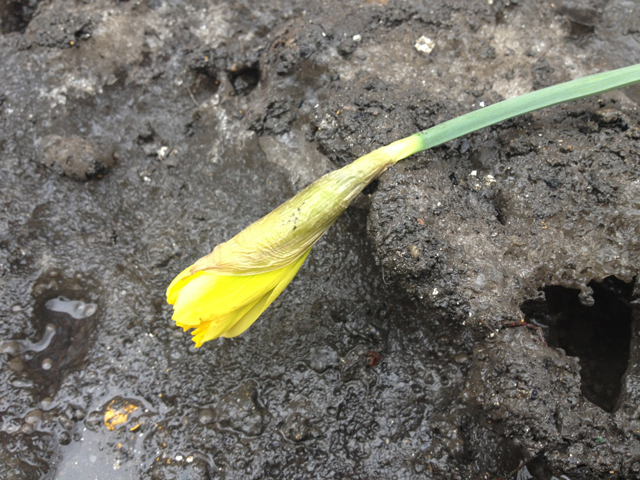
I very much wanted to connect and moved around the room, falling into step with everyone I encountered. I noticed that although I tend to be bold about approaching people to dance with them, I am very quick to move away if they are not immediately receptive. There are often many layers to intention; and I note that, in part, I don’t want to invade anyone’s space. And I sometimes like to move through the whole room without settling in with anyone so I can enjoy the experience of being in the human field. Also, I think part of me is afraid of being rejected.
When someone else approaches to dance with me, it might take me awhile to key into their advance and to warm up to the idea of accepting it. If someone is persistent without being aggressive, I might appreciate that they really want to dance with me in particular, and that they have made a conscious choice to connect. I vowed to experiment with staying a little longer in instances when I approach someone to dance but they don’t immediately (or obviously) engage in partnership.
I note a parallel in my job-work life at the moment. Sometimes I start out gung-ho, then if I encounter resistance, I pull back. Perhaps it is unrelated, but simultaneous to this noticing, I managed to find a new angle—a new way to approach my work with integrity and excitement, rather than by giving up and retreating when I feel like I am running into a wall. For some reason, I still have to remind myself to look for the empty space, especially when I am in partnership.
I was slightly apprehensive about dance this morning. Sometimes when I have a run of unpleasant experiences, I start to fear that the dances of freedom, athleticism, creativity, insight and connectedness that I often experience have evaporated forever. Tears came and went as I was swept by inspiration, repeatedly raising my hands high overhead and arching back with my eyes upward, taking in the antique tin ceiling and stage lights as my head swept back and then rolled forward dramatically again.
During the Stillness after a recent yoga class, the instructor suggested that we should invite what we need into our lives. For me, the first word that came to mind was “inspiration.” The winter has been long and grueling; and although I am not consciously begging for spring, I feel emotionally exhausted. Money has been tight, work has been rock-and-hard-place-y, sleep has been brief, and long dormant issues have reared their heads with unexpected vehemence.
Tammy reminded us that the neighbors below the Martha Graham Studio do not appreciate dancers’ feet pounding heavily on the floor above them, and I experimented with gentle feet, only occasionally forgetting and punctuating a movement of the hips with a sharp, percussive stomp. Knowing how to be powerful without making loud noise is a skill I would do well to learn.
After the first wave, I felt connected and porous. That is to say, I felt like my energy field was uncompressed and could easily mingle with the energy fields of other practitioners. I was able to do what I call “passing through practice,” something that was taught to me by an ancient spirit. I mean, that Iimagine an ancient spirit taught to me.
I wrote this at the time:
“A couple of weeks ago during Jonathan’s class, I (imagined I) was seeing everyone’s
spirits including my own: light bodies, pain bodies, and a diffuse kind of
light. One of my spirits—I think a very old male ancestor—really wanted
to interact with me. At first I felt nervous because he was
manifesting differently than what I usually see. He was more like a shadow
spirit. But I told him, it’s OK, I am not afraid, I am totally porous and I
am not afraid of you. So he started to dance with me, to overlap with me,
and to pass through me. It had never occurred to me that possession could be
so gentle. At times both our spirits were intermingled. Then, everyone
else’s personal energy fields were kind of passing through mine, and mine
through theirs.” –January, 2009
This practice is absolutely not available unless I am in a connected and porous state, but if I am blessed to arrive there, it is simply a matter of intention and shifted perspective.
My energy faltered slightly as we moved toward the end of the class, but I left feeling uplifted and re-connected with myself. Stepping out onto Bethune Street, I found deep slush, hard winds and steadily falling snow. But my heart held a tiny sunshine, reminding me that after a particularly aggressive winter, the awakening of spring is all the more glorious.
March 1, 2015, NYC
by meghanleborious | Feb 17, 2015 | Notes on Practice
This blog consists of my own subjective experiences on the 5Rhythms® dancing path, and is not sanctioned by any 5Rhythms® organization or teacher.
Did I really title my post a couple of weeks ago “The Most Grueling Stretch of Winter”? It is a little like turning to the person in the car next to you and saying, “Wow! This is great! There is almost no traffic today!” The next thing you know, you are going 5 miles per hour and calling your destination to say you will arrive hours later than anticipated.
New York is strident today. The neighbor’s wind chimes kept me up all night flinging themselves in the erratic gusts. The streets are coated with a film of chalky white salt. Polluted snow is frozen in perilous little grey mountains. There is no moisture whatsoever. My lips are cracked and flaking. Great gales of wind blow the salt in visible waves. It is so dry that I stepped on some dog mess and it didn’t even matter. There wasn’t even an unpleasant squish—just hard little poo ice cubes under my salt-stained boot.
Dance on Friday began pleasantly enough. I could move, thankfully, thankfully. Halfway through the class, Tammy encouraged the people who could access Flowing movement to continue to move gently, attending to the many people who found themselves in the throes of inertia. I moved at first with quiet inspiration, but as she instructed the people who were moving to partner with those in inertia, I began to sink into the inertia, myself.
I also grew preoccupied—two different strands of emotional unrest began to assert themselves in my thinking mind; and I found myself with forehead knitted, slowing down, aware that the stream of my breath was growing increasingly constrained. A pattern has emerged lately—I start the class off cheerful, energetic and open; and end the class tired, tight and airless.
In fact, both my voice and my breath seem thin to me these last days. It is like I am speaking only from the mouth, and the slime in my throat and sinuses is blocking energy from my belly and the rest of my body. I have to clear my throat often and my voice has a struggling quality.
Before she paused to offer teaching direction in the middle of the class, Tammy said, “Anything that I say, I might say the opposite another time.” As she often does, Tammy spoke of something she remembered from Gabrielle Roth, the creator and blessed mother of the 5Rhythms practice. Gabrielle had given a set of instructions, then tossed off at the end, “or not!” I love this. I hear it as: take it seriously, take it on, embody the instructions, embrace the rhythms…and at the same time, don’t get stuck on the method, don’t get attached to doing it a certain way, don’t try to escape the unpredictability, and, for the love of Gods, don’t take it so seriously that it loses all its air! I keyed into “or not” even more because my newly five-year-old son was experimenting with the same phrase when we were driving yesterday. I couldn’t help but wonder if Gabrielle was playing with me somehow, and it made me smile.
In the 1990’s a close friend and I were immersed in identity politics. It felt critical to us at the time, but he used to say that after you went on a rant about the dominant paradigm or other pressing injustice, you should throw on “n’ shit” at the end. For example, “The white male hegemonic power monopoly evolved through the systematic suppression of women’s subjective experiences of their bodies…..‘n shit.”
I danced with a friend who I love and had a hard time connecting. I noticed that if I stayed light and kept moving my feet, spinning and leaping, it was easier to be sort-of connected—at least not as apparently out of sync—but that it was hard for me to empathize with her experience of being in her body—which is so often the source of inspiration for me in dance.
My son has taken to mountain climbing the dingy smog-grey ice mountains that edge Brooklyn’s sidewalks. Several times lately, he has asked me to follow his feet, and I have trudged along behind him, noting the tenderness of seeing him thus, and of seeing the way forward through his sharp eyes. It reminds me of a powerful experience I had during Lucia’s workshop in December 2013 (see blog archive) when a “witness” trailed me through the rhythms and I ended the exercise sobbing uncontrollably with my face buried in her hair. There was something about the way she was present and the way she had my back as she followed me that was incredibly moving. And there was something in the way my son trudged joyfully over obstacles, sure about his choices of footing—sometimes a little risky but by no means kamikaze—that made me smile.
Lately, he is going through a phase that reminds me of how he was at age two—tempestuous and impulsive. After a difficult afternoon, when I was trying to get across the point that he must control extreme outbursts, I opened Gabrielle’s book “Maps to Ecstasy” at random and read:
“The best thing to do with an angry child is not to try to turn off the anger, to push it down, to insist that the anger be controlled; rather, it is best to give the child permission, to affirm it. Maybe you can get down with the child and do an angry, stomping monster dance together. It is…vital for us to help our mates, lovers, children and friends in letting their emotions breathe and find apt expression” (74).
As inertia and distraction began to take root in me, an ardent new dancer caressed me as he zoomed past, without even looking at me. My mind said, “Are you kidding me right now?” I don’t know why, but I can be very sensitive to this kind of invasion of space. Similar things happened two other times, with two other people. I guess I was drawing it! Either that or the ardent new dancer was affecting the dynamic strongly. I spent several minutes thinking about how I could tell him at the end, “Please don’t ever touch me unless you make eye contact first and you have some reason to believe that I am receptive to being touched.”
It is an extraordinary contrast between the times when I can move with energy, inspiration and creativity; and the times when I quite simply-can’t. I hovered near one of the columns, moving slightly. I had the thought, “I had better start moving or I am going to get stepped on,” when someone in the throes of Chaos tromped right on top of my foot. It hurt, and I pinched my already unsmiling face further, but I really couldn’t blame her.
Last week in class Tammy talked about how sometimes with the press of life, you can be “in the moment”, but each moment can be totally isolated from the others.
It made me think of a scene in the book “The Unbearable Lightness of Being” by Milan Kundera (or is it in “The Book of Laughter and Forgetting?”) in which a character has a moment when he dislocates from time. He is simply passing a children’s schoolyard and listening to their play songs, but the moment becomes incomprehensible and garish. It is, in a way, the ultimate postmodern experience. Something about the myopia of trying to move in the world in the depths of winter affects me similarly. It is like I am too busy hunching over to protect my organs from the cold to notice the connections between things.
I spent nearly the entire second wave in distracted ill ease, but had a reprieve at the very end when a friend who I love to dance with engaged me. I was drawn in to his great, pendulous backsteps and spinning, wide-armed gestures. I think part of the reason I found a few moments of freedom with him is that, based on years of shared dances, I knew I could trust him.
As always and as is correct, I left without admonishing the ardent new dancer; and hoping that when I got outside I would remember that there is no point in bracing myself against the cold since it wouldn’t actually make me any warmer.
Writing today, I found a little ember of gratitude. I cupped my hands and blew on it, hoping it would keep me warm through the remaining arctic days.
February 15, 2015

