by meghanleborious | Jun 6, 2020 | Notes on Practice
I’m on a train headed home after a late night out in NYC. A man halfway down the train is trying to catch my eye. There are 20 or so people on the train, all of them apparently people of color except the one white man who is trying to catch my eye.
I didn’t have language for this kind of experience until I saw a retrospective of the artwork of Adrian Piper at the New Museum in 2000. Piper is a Black artist who was often mistaken for a White person. She created small index-size cards that start with the text, “Dear Friend, I am black. I am sure you did not realize this when you made/laughed at/agreed with that racist remark…” She handed the cards out when White people mistook her for a White person and tried to team with her, setting Black people up as an “other” and making racist remarks. I love to picture her handing these out, for example on the subway.
Perhaps like this man, who seemed to be trying to connect with me for the simple reason that we were the only two White people on the train, perhaps trying to team with me to create an affinity that made him feel like he was separate, different from the rest of the train riders.
***
My core personal practice is the 5Rhythms dance and movement meditation. Normally, I dance in a 5Rhythms class once or twice a week and occasionally on my own, but since the start of the pandemic, I dance a 5Rhythms wave every day. To dance a wave is to move through each of the 5Rhythms–Flowing, Staccato, Chaos, Lyrical, and Stillness–in sequence.
Yesterday, I felt disheartened and lethargic. The coverage around the murder of George Floyd swirled around in my head and I kept having ideas for things I should do, actions I should take. Memories, regrets, insights, and bits of speeches mixed in my head with the recent reporting.
I danced a lone 5Rhythms wave in the woods, on the bank of the Scantic River. I couldn’t get traction until I started to move with full attention to the breath in each rhythm.
In Flowing, I drew air in, emphasizing the inhalation, filling my lungs, letting in as much air as I could take, allowing my body to move in response, circling as the breath fell out. I didn’t think Staccato would be available, but after a time in Flowing I suddenly shifted attention to the outbreath, exhaling with force, pumping my belly, sinking into the knees, exploring the points of the elbows. In the rhythm of Chaos the breath got choppy, sometimes gasping, sometimes fast, sometimes with a forceful exhalation, sometimes briefly held, defying regularity. In Lyrical, the breath stayed just as unpredictable, but got much quieter and softer. In Stillness, the breath was elongated, and also seemed to be coming into and leaving the body through the pores.
Today, after a full day of working remotely and spending time outdoors with my ten-year-old son, Simon, I decided to set up speakers and dance a wave in the backyard of my parents’ house, where Simon and I are temporarily living.
Before I started, my mom took a picture of me taking a knee, a gesture inspired by NFL football player Colin Kaepernick’s controversial action of taking a knee before a game to acknowledge the continuing deaths of Black people at the hands of white police officers, and to express support for the Black Lives Matter movement. I planned to post the image in my school community.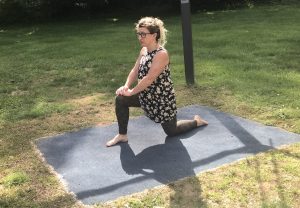
I remembered something that happened in a classroom several years ago. I was co-teaching with a Black Haitian-American woman; and the class was entirely composed of Black and Brown high school students. Something we read led a student to express anger about White people and their racist actions.
Everyone cringed a little and looked at me. I was the only White person in a room of 20 or more people, and they thought I would take it personally. “Guys, listen. Don’t worry about me. Seriously. I am just one White person in a roomful of Black and Brown people. It is totally ok if I’m uncomfortable. Sometimes things come up that might make me feel uncomfortable. I won’t die from being uncomfortable. Everyone should feel free to discuss their feelings and opinions here.”
Looking back, it’s crazy that just one White person could have so much impact–a manifestation of White privilege. Back then I didn’t have that language, but I knew what was happening felt wrong, and that I didn’t deserve to have so much impact on the discussion. If I didn’t think to say what I said, I wonder how many voices would have been silenced? I wonder how many children of color in classrooms with White teachers do feel like they have to temper what they say, to hold back their opinion, to account for the sensitive teacher’s White fragility and inability to cope with discomfort? Thank God I had the insight and courage to speak this time. I wonder how many other times I haven’t even noticed?
So much of my practice and my training, both in meditation and in 5Rhythms, has been about building up tolerance to discomfort, being able to stay with what whatever is happening, rather than trying to escape it–in this case it would have been at the expense of discounting and silencing many young voices. It this willingness to be with reality that is needed now, even if it is uncomfortable or painful, as we interrogate the internal and external structures that sustain oppression.
I remembered another classroom incident, this one more recent. A student reacted to a phrase in Amy Tan’s “Joy Luck Club,” when Chinese American character Jing-Mei’s mother says, “You look like Negro Chinese.” Hearing the passage, the student raised his hand and said, “That seems kinda….racist.” My co-teacher minimized his feelings. “Oh, no, that’s not really racist, it’s just…”
I don’t even know if you would call this gaslighting because she seriously believed her position. To be fair, she is one of the most dedicated educators I know, and believes she has devoted her life to helping young people. And I guess it’s possible she was trying to protect the student from discomfort or pain. It’s also possible she wanted to avoid discomfort, or that she was just unable or unwilling to see it.
Either way, the student closed his mouth, tightened his jaw, and folded his arms in front of him–even after I indignantly protested. What would a lifetime of experiences like that do to you? What does a lifetime of experiences like that do to you?
***
In contrast to yesterday’s wave, today’s was loud, energetic, and messy.
A blaring fire siren went off while I moved in Flowing, so I moved with its urgency along with the patient, circling track.
Today, I had less difficulty than yesterday with the rhythm of Staccato–for me the most variable of all the rhythms. I moved easily, gearing up with purpose. My feet were alive and expressing minute shifts of balance and force. My shoulders came alive and I expanded my zone, taking up more and more space, hopping, double hopping, sometimes adding a punctuated jump up. I was way in a cut, then suddenly the song tore me up and I was sobbing, snotting, thinking about the state of things, and praying to see reality clearly. Ideas for action kept jumping to mind. I needed several staccato tracks today, and went through a huge range of emotions, including anger and growling ferocity during one energetic song.
Chaos kept sneaking in all along, and when it finally broke out in full force, I flung my head around in weighted spinning, sinking low and keeping my arms alive and defiant. I cried more, grateful for the chance to discharge some of the powerful emotions coursing through me.
Lyrical started out extremely fast, at 173 beats a minute. I tried to dance to every single rhythm, melody, and sound, an impossible but engaging attempt.
I moved for some time to the currents in the air even after the music stopped, reverent.
As a White person, my role now is to be a ferocious advocate and a humble collaborator, in service to justice and dignity for all people, for my own child and for every mother’s child.
It’s the least I can do.
“My humanity is bound up in yours, for we can only be human together.” –Desmond Tutu
This blog consists of my own subjective experiences on the 5Rhythms® dancing path, and is not sanctioned by any 5Rhythms® organization or teacher.
by meghanleborious | May 7, 2020 | Notes on Practice
 I’m making a garden. Today, a local man came with a rototiller and churned the ground up, breaking through a thick layer of grass.
And yesterday I spent the afternoon planting flower seeds.
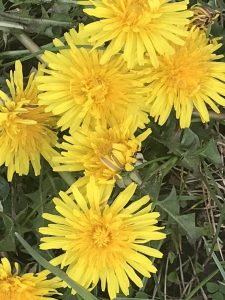
I haven’t experienced spring outside of a city since I left home for college in the 1990’s; and it has been fascinating. Cold is very slowly transitioning to hot. The trees are unfurling. Active, small creatures like squirrels, chipmunks, and birds romp at the edges of my perception. The field behind my parents’ house–where my ten-year-old son, Simon, and I are hoping to wait out the pandemic–is nearly solid yellow with dandelions. They would normally have been trampled by the high school athletes who use this field to practice, but this year they are abundant. Nearby, the grass and plants at the contours of one of the river’s gurgling feeder streams are emerald green now, translucent with sun energy.
Following my work day, I thought I would do a friend’s zoom class. After playing on the swing in the backyard with Simon I was running late, but decided to set up the speakers and computer outside and join anyway. As it turns out, I got the days mixed up. I knew I didn’t have time to pivot because of a work commitment later in the afternoon, so I decided to go with my setup and dance to a playlist I already had prepared.
Earlier, talking with a friend, I had recalled the gardens of my childhood. At Simon’s age, I had a big garden. My grandfather would help me till the soil and plant in late May, then I tended it myself. The first year or two, I had to haul water in my little wagon some distance every day to water my plants.
I spent hours there. I remember placing a pepper or other vegetable upright in the sun and sitting and staring at it for long periods, what I would now call a form of meditation, though I didn’t have (or need) language for it at the time. I remember eating the butter-and-sugar corn I grew slathered with butter at backyard summer dinners. I remember the dark dirt, the weeds, the sweat, the chicken wire fence, the dangling green beans, the prickly thistles, the crawling around on the damp, uneven soil between the rows.
Knowing my own son at this age, I marvel at my childhood ability to take on this big project and accomplish it without reminders, rewards, or adult interventions of any kind. I’ve been trying to help Simon learn to be a creative self-starter, but have faced challenges in getting him to buy in, perhaps not unusual for his generation. As a child, I had vast stretches of unstructured time, something that led me to learn and create without pressure and often without audience.
I became an urban person in my late teens, immersing myself in a totally-indoor underground dance world, and lost my affiliation with the earth.
My brother lived for many years in Colorado. Before then, I always said I was an “ocean person,” like some people say they are a “dog person” or a “cat person.” But when I went to visit him in Colorado and explored the raw, jagged Rocky Mountains, I decided I was a mountain person, too. I realized it was limiting to make myself be one or the other.
In the same way, in becoming so urban, I became not-earthy, not-rural, not-small-town.
But the truth is that I didn’t have to kick out one affiliation to insist on being another. They can both live in me. And now I’m remembering a nearly-lost self who had a numinous connection to natural phenomena, who followed the cycles of the moon, who read the tarot, who perceived everything as alive, and who studied nature-based religions with keen interest.
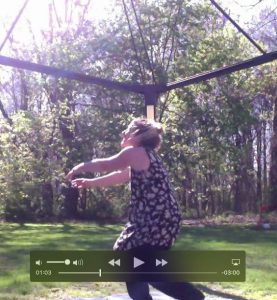 Back to the speakers and computer in the backyard, I decided to dance a wave. In 5Rhythms, that’s when we dance through each of the five rhythms in sequence: Flowing, Staccato, Chaos, Lyrical, and Stillness. I was tired, and I didn’t really think I would get into it. In fact, I weighed the possibility of doing yoga or going for a run as soon as I pushed through this short wave.
The speaker volume was way up and I started to move in circles and pay attention to my feet in the rhythm of Flowing.
Of the five rhythms, Flowing seems most foreign to my nature. In Flowing, we connect with the earth. We drop our weight and our attention down. There is a real humility to it. And to be honest, I have sometimes found it boring, and have been eager to rush into the fiery expression of Staccato and the explosiveness of Chaos. It’s almost like in sticking with Flowing, I’m just doing my due diligence.
It’s possible this disinterest in Flowing relates to the fact that for so long I disowned my earth-self in favor of a more desirable identity. It took years of bringing my attention to the feet again and again to even begin to find my relationship to Flowing. It took many more years to fall in love with it.
Today, I felt the soft earth under me as I moved, and let it be simple, let it hold me, let it call me.
My Dad appeared on the back steps and asked if I had any ideas for dinner. I gave my input, then returned my attention to the feet, finding increasing engagement.
In Staccato the music spoke to me; and I couldn’t help but be inspired to sink low, to travel, to explore my elbows, to exhale forcefully. A song I absolutely love played and I leapt and bounded, removing my shoes and bouncing directly on the soft grass. And another song I love. And another. This one was a coiling, fast-tempo jazz song in the transition from Staccato into Chaos.
By Chaos, I was untethered, spinning and bouncing back and forth; in a rushing, weighted, articulated spin with sailing head, low and pumping, light and loose. One knee has been sore with so much practice, but dancing on the grass protected it, and I went all out, traversing a wide radius.
In Lyrical I was ebullient, cascading to the ground and into the air, beaming, coursing an arm up and then another, crossing over, rising a kicking leg to the side, falling into a dramatic squat and rapidly uncurling in an upward whirlwind. I added one more Lyrical song since I was nowhere near done with this exploration. I rocked my elbows in a plane around me and let them pull me up into my side angles, nearly kicking up my heels.
It wasn’t until many years of dedicated work with Flowing and with the ground that Lyrical started to reveal itself to me, and since then it’s become a place I love to visit.
In Stillness I was still rushing, alive with light-sugar. The lowering sun peeked through the emerging tree leaves. When the song faded, I continued to move with everything, feeling the humming molecules of the ground, the trees, the small animals, and even of the plastic and metal around me.
I love taking my friend’s class, but I also love dancing alone, and it kind of seemed like a blessing that I’d mixed the days up. I love what individual practice teaches me. I love that it is self-generating, and that I don’t need anything but what’s inside of my own heart. And connecting with the land gives me endless things to dance to–a rich symphony of form, space, and energy.
I startled, remembering I had a work commitment at five, and ran to check the time.
I had another half hour, so I decided to practice yoga in the sunshine. Standing alert, with my feet flat on the warm patio, hands aloft, I spotted a bird of prey, almost invisible it was so high up–seeming to hover in the air, barely moving. Moving through several poses, each time I found myself on my feet and looked up, the far-off bird was still hovering in that one spot. Then, the next time I folded my head down, moved through a sequence, and rose back up, it had disappeared, leaving nothing but endless blue sky.
Simon and I raked the grass clumps out of the newly-tilled plot that will be our garden, hauled them to the edge of the lawn, and dumped them into a raucous pile.
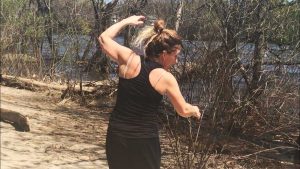 Later, I ran in the woods on a path along the Scantic River. White and grey clouds began to roil and it started to rain. I danced with the river’s currents, seeing into the depth and contours of the river because of the lack of sun glare. I saw the land’s contours above the water line, too, and perceived the continuations of the rivers and streams with all other flowing water.
I found a peaceful spot to meditate, patiently noting each cold rain droplet on my exposed hands and face, grateful to be in the woods, grateful to be sitting on the soft sand of the river bank, grateful to be alive, grateful to the earth.
May 6, 2020, Broad Brook, Connecticut
This blog consists of my own subjective experiences on the 5Rhythms® dancing path, and is not sanctioned by any 5Rhythms® organization or teacher.
by meghanleborious | May 1, 2020 | Notes on Practice
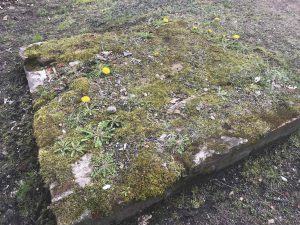 A lone duck appeared while I was meditating on the bank of the modest Scantic River. The duck was industriously chugging her little head back and forth like a small child on a big wheel, letting out a periodic call of “quack” as she floated by. I was touched by her efforts, smiling and internally cheering her on.
It’s been over five weeks since I left NYC along with my ten-year-old son, Simon, to join my parents in Northern Connecticut and try to wait out the pandemic.
In the beginning I practiced ferociously. Every day, every spare minute. Zoom 5Rhythms classes, individual waves, dancing on the grass in the backyard, dancing in the woods, dancing in the little practice space in my temporary home.
Every session started to blend together. My knee started to hurt. I started feeling generally left out and isolated. Simon started to act up, no doubt suffering from the loss of contact with people his age, and the pervasive sadness and uncertainty.
Yesterday, I decided to lighten up for a few days, and give myself a little distance from practice.
I juggled my afternoon options: should I go for a run? Meditate? Do yoga? Dance a wave? What did I most feel like doing?
Since the day was lovely and several not-lovely days were forecast, I settled on a run in the woods. I felt safe going hard on the soft trail, and lost myself in moving. I paused to take photos along the way, loving the visual narrative the images were revealing.
I came to my favorite spot, the convergence of a small river and a large stream, with a grassy point between the two. There, I decided to dance a wave. Easing into the rhythm of Flowing, I moved up and down a small hill, dipping and casting into low circles. 
At a workshop once, in Flowing, the teacher advised us to work with gravity as though we were dancing on a hill. Being on a hill, I played with rising and falling, and the shifts of gravity as I moved up and down it in hoops and arcs, to a soundtrack of babbling water splashing over a fallen tree.
Someone appeared in the woods on the opposite bank, and I tried not to meet his eye. Staccato crept up, then drifted back into Flowing. I moved back into Staccato, with punctuated exhalations, low-sunk gestures, and emphatic movement declarations. 
It took me a while to warm up to Chaos, but it eventually presented itself. I jumped and leapt, releasing my head and encouraging myself to go all out, despite the person across the river who might be watching, and who I was pointedly avoiding.
I practically skipped the rhythm of Lyrical, as suddenly the hum of the woods brought me straight to Stillness. I consciously called on Lyrical, though, and found several minutes of light, creative movement. It wasn’t until then that I noticed the person across the river had gone. It was possible I’d been alone for most of the time, so apparently I’d wasted my energy in purposefully ignoring him and psyching myself up to go all out even if he thought I was weird.
This place calls me to Stillness, and I was content as I finally settled into it. In Lyrical, I danced with everything that was moving. The small animals, the wind in the trees, the passing cars, the complex currents in the river. I even started to move with sound waves like bird calls, the rush of trees, and the sounds of the water. 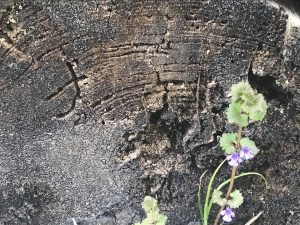
I remembered an experience at an underground dance party many years ago. Thousands of partyers were crowded into an old warehouse, and giant bass speakers shook the architecture. At this party, they also had complex light projections that twisted and morphed. I spent the entire night in rapture, dancing to the light show. As an artist, realizing that I could dance to visual cues, not just music, blew my mind.
Since then, I’ve learned that I can dance to anything, to everything. A passing train. A sequence of feelings. An announcement over a loudspeaker. The receding tide. One of my neighbors in Williamsburg, Brooklyn kept pigeons, and I used to dance with the swirling, diving flock as they raced around in response to his direction. Today, moving to everything in the woods reminded me of that first opening. 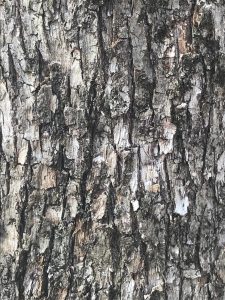
Curiously, though I was in the woods alone, it started to feel hectic. I decided to let go of the hectic feeling, but to continue to move with everything around me, including wind; and the curves, intersections, and complexities of currents. Nothing changed but suddenly I was enveloped by silence.
Later, I spent time doing yoga, but I wasn’t trying to get a workout in, wasn’t trying to be as present as possible, wasn’t doing anything except following my inclinations and feeling the joy of having a body.
 Today, after a full day of online work, I decided to join an afternoon 5Rhythms Zoom class.
I had to get Simon settled into an activity, so I joined the class a little bit late, then fell happily into the rhythm of Flowing. I’ve really been into grounding lately, much more than usual, and I exhaled as noisy energy poured down my legs into the ground. Today, I picked up a weighted meditation cushion, and started using it much like I used the hill yesterday, to experiment with gravity and momentum, at times dropping it around me in circles, passing it hand to hand. When I wasn’t holding the cushion, I let my arms be soft and fall around me as I moved in endless circles.
I discovered that the meditation cushion had a sewn-on handle as the music transitioned into the rhythm of Staccato, and I continued to play with weight and momentum, now pausing with the cushion on my side, on my back, at times letting it pull me through emphatic movements, my elbows sharp. I also experimented with holding the cushion in front of me, dropping it, then using its momentum to rush me straight across the small circle I was dancing inside of.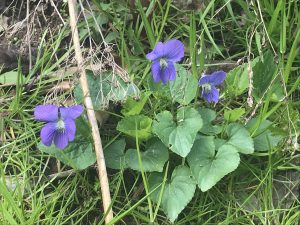
This, too, reminded me of my experiences in the underground dance world of the 1990’s. I was a fast and athletic dancer, and would imagine I had weight in my hands and feet to source power from the ground: to land, coil, and fling myself into all sorts of dramatic gestures. Once a group of people told me they had come from a neighboring state to see me dance this style at a local club’s jungle music night. It was a cool compliment, but by then I was trying to detox and withdrawing from club dancing. Shortly after, I withdrew from dance altogether for several years.
In the practice video I made for my own curiosity, I seemed very committed in this part, though I remember that thoughts of work were occasionally distracting me. I paused to give an instruction to Simon. Watching it I acknowledge the reality that it’s rare for me to be able to take a full break from parenting to practice, especially since we’ve been staying at home and I am now his parent, teacher, and playmate all-in-one. 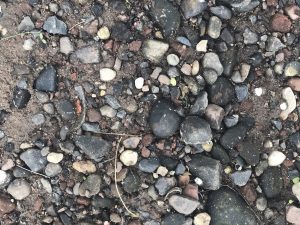
I thought I was flat in Chaos, but watching is fascinating today. My head rolls me around on my shoulders, hips released after a long yoga stretch session before dancing, sending movement through the spine and into this lolling head. I pause again to say something to Simon, then drop my head again, and bounce back and forth, then fall into side twisting and spinning.
At the outset, Lyrical was elusive again today. But I started spinning my hips around, almost like rolling a hula hoop and followed it into motion around one leg and then the other, and soon into pauses and full extensions. 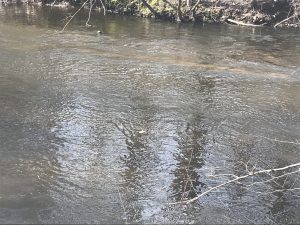
My hands look like two beautiful racing creatures in Stillness, then I shift into simply stretching. I paused again to say something to Simon, then in one final shape before clicking “leave meeting.”
I was hoping some revelation would come through before finalizing this text, but sometimes it isn’t so obvious. Sometimes the revelations aren’t epic or picturesque, but come in tiny increments, in daily practice, in patient engagement.
Good thing I took a break from practice. It helped me to feel more responsive and curious, though truthfully, I don’t think I actually “practiced” any less.
April 29, 2020
by meghanleborious | Apr 20, 2020 | Notes on Practice
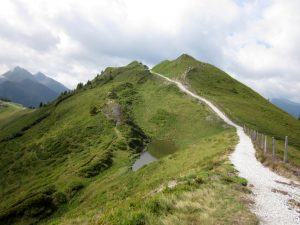 I really didn’t feel like practicing. It had already been a long day; and I had another big day coming. I was on a meditation retreat at Garrison Institute, and part of my personal practice was to dance a 5Rhythms wave, o sea, in other words, to move through each of the five rhythms in sequence. At least once a day, I tucked my socks into my pants, sprayed myself with deet, and made my way down a wooded path to the Hudson River. Because it’s my practice, even though I didn’t feel like it, I still stepped in.
I began in a tiny inlet, on a beach enclosed by tree cover. In Flowing I was lackluster. I moved in circles on the little beach, cutting up the sand’s surface. In the second rhythm of Staccato I was still not really into it, determined to see the wave through, but also eager to get it over with. Then, a spark caught, somewhere in the transition from Staccato to the third rhythm of Chaos. I moved from the little inlet to an open, glacial rock that rose up over a powerful expanse of the river and moved with abandon. In Lyrical and Stillness, the world opened itself. I imagined that I sunk to the depths of the ancient river, where it was black and dense, then rose up again with its density streaming down the rock channels of me.
Sometimes practice is mundane. Sometimes it is life-changing. You never know what will happen until you step in. In 5Rhythms, there is a tradition, a benediction, sometimes expressed at the beginning of a wave: “See you on the other side.”
All of our dances, all of our practice experiences are necessary. After about two years of dancing the 5Rhythms, I went through a period of agonizingly painful dances. It lasted almost two months. Every time I stepped in, I felt terrible. I felt isolated, disengaged, disincluded, and unable to connect. It was extra painful because I’d become accustomed to the wild, frenzied release that left me whimpering and grateful, alive, full, knowing. And for this long period, it just wasn’t available.
Thankfully, by then, I had already developed a strong practice. I had already verified for myself that 5Rhythms was beneficial for me, and was worth the dedication of precious resources. If I didn’t already have a strong practice–a regular, intentional practice that was not rocked by external factors–I’m sure I would have stopped attending 5Rhythms classes. As it was, I just kept attending, noticing how I was feeling, and knowing that it would pass. Later, when I hit patches of agonizing discomfort, I would draw on this experience, reminding myself that practice would not always be pleasant, but that the periods of discomfort would pass, and would leave me with deeper faith in my own ability to stay present in the face of whatever arises.
In the simplest terms practice is something we do regularly and intentionally without being attached to a certain outcome in a given session. We show up again and again. Usually, something only becomes a practice if we have been raised with it, or we have field tested it and found it worthy of our dedication.
To me, having a 5Rhythms practice means regularly, intentionally dancing the 5Rhythms, regardless of how I feel before, during, or after. It means I don’t ask the dance to fix me in the moment, but, over time and with slow erosion, to free me from my personal prisons and to reveal the nature of reality.
When my son, Simon, was first born, I developed a practice of writing a poem a day. As is true of many practices, it started accidentally. My sister invited me to swap haiku poems for fun, and somehow I caught a little groove of poem writing. I let go of using the haiku form, and instead wrote about my daily experiences, capturing the exquisite beauty of Simon’s first months of life, including the blizzard snows that buried New York City that year, the sublimely quiet room where I sat breastfeeding him in the quietest hours of night, the silver J train sliding across the bridge in view outside the window, and how it felt to look at my tiny son’s face as he slept. And I also captured the pain of that time period, as my relationship with Simon’s father was falling apart.
After a week or two of catching an accidental groove, I started to realize it might be worth making this into a practice. So I did. Some days I wrote more than one poem, but almost every day I wrote at least one, sometimes staying up just a little bit later to accomplish this task. Sometimes the poems were mundane, sometimes they were life changing. Once I wrote. “I’m too tired to write now. Maybe if I can just hold this pen upright, the world will flow through it.”
One of the benefits of this practice was that it sensitized me to the poetic level of experience, and had me looking for it all the time. To me, “poetic” is a level of experience that is concerned with the beauty of exquisite reality, of sometimes painful and imperfect aliveness.
I kept it up for nearly three years, writing over a thousand poems. At that point, I discontinued the practice. I had started a new job, and it started to feel like I was forcing it in a way that was no longer benefitting me. I had already started to slack off, but made a conscious choice to let it go, recognizing that practice is worth discipline, but once it becomes rigid, it might be time to let it shift or end.
Knowing when to embody Flowing and when to embody Staccato is an important skill for working with the practices that create meaning in our lives and help us to realize our potential.
In 5Rhythms, practice falls into two categories. “In the dance” when we are intentionally practicing, and not in the dance, in other words, at all other times. All of it can be viewed as practice.
Whatever we repeat becomes a practice, in a way. For example, road rage, insecurity, gratitude, or frequent hand-washing. Through repetition, we carve a groove in our mind to arrive at a particular state or to exhibit a certain skill. For our purposes, though, we need to distinguish between intentional practice and practicing/re-enforcing conditioned responses.
Practice and conditioned responses can look similar, but are fundamentally very different.
The key difference is in how we are in relationship to the given practice. If a practice serves to open our experience and bring us into (sometimes painful) confrontation with our misconceptions, then it is probably a practice. If a “practice” causes us to shore up our view of ourselves as separate or better than or less than or omnipotent or limited, and to disconnect from physical and energetic reality, then it is probably a conditioned response, not a practice. This is true even if it looks like a practice.
Distinguishing between these two requires skill and insight, and often input from a clear-seeing teacher, especially in early to intermediate stages of the path. And there are often multiple layers of intention. As such, a practice might need to be examined complexly for information about how it is functioning for a given practitioner.
Identity stories are a kind of practice, and can support practice in the larger view. For example, my teen students need to develop healthy identity stories (“I’m a good student, I’m lovable, I’m someone who has a healthy relationship to emotions”) to support them on their path. If they cannot construct through practice these healthy identity stories, they will struggle to move into a later stage of development. At another level, those same identity stories may become conditioned habits, and obstacles to opening into the naked truth of bare awareness. But they are developmentally essential practices at a certain stage.
Some 5Rhythms teachers believe that the core of 5Rhythms practice is continuous, sustained, profound mindfulness of body, and of the feet in particular.
Our main practice is to move.
And there are infinite sub-practices within the main practice of 5Rhythms.
In Flowing, we practice bringing attention to the soles of the feet and dropping the weight down. We acknowledge the importance of ground and grounding. We also practice allowing our bodies to move in unending circular motion. And we practice having an attitude of receptivity, and paying attention to the inbreath. In Flowing, I also practice paying attention to the perimeter of the dance floor, and sometimes physically circling the space. Sometimes I also use a practice adapted from Thich Nhat Hahn, in which I acknowledge each person without direct eye contact, patiently noticing each person and saying internally, “I see you there; and I’m grateful for it.”
In Staccato, we practice bringing attention to the outbreath, and with using sharp, percussive movements. We invite specificity and direction. We also find nuanced ways to work with the beat, and to relate to partnership. One sub-practice that I use in Staccato is noticing if I think partnering with someone is negative, positive, or neutral. Then, I either decide to move away from them if I don’t want to dance with them, or decide to stay and see what happens. And the same for someone I feel positive about partnering with.
In Chaos, we let go of our heads, and alternate between shifting weight between our feet, and moving with whatever wild demon possesses us. We invite and celebrate unpredictability. We go all out, to whatever extent we can at that time. One practice I personally use in Chaos is to experiment with going to the farthest edges of balance. I also experiment with inviting resistance to Chaos, then releasing fully into it, sometimes toggling between the two.
In Lyrical, we rise up and allow ourselves to become weightless if it’s available, trusting that we’ve already established our ground, and often engaging with the element of space. Lyrical shifts so much, but I often experiment with practicing extension and balance in Lyrical.
In Stillness, we allow ourselves to be moved by breath, and in some cases to merge with a larger view than conventional reality can accommodate.
In practice, nothing is always true. There is always nuance. For example, in general it is helpful to open the eyes during 5Rhythms practice, for practical, psychological, and spiritual reasons. However, a given person might have a conditioned habit of always keeping the eyes open because they are afraid to sink deeply into their inner darkness. In this case, it would be appropriate to engage in a practice of closing the eyes periodically, to investigate and explore the teachings available through breaking the habit of always having the eyes open. Also, intuition might insist on closing the eyes at a certain time. This might be conditioning, or could be an important directive from inner wisdom or spirit guides. Insisting on always keeping the eyes open, without any willingness to acknowledge nuance, might suppress important insights or revelations.
Practice is a balance between structure and creativity. Committing to a practice or a sub-practice requires discipline. Sometimes we do it even if it isn’t fun or we aren’t in the mood. At the same time, responding to the shifts in one’s needs requires creativity; and it is a vibrant, dynamic process.
Doing something as a practice yields benefits that are not available in haphazard or incidental actions. Practice requires grit and discipline. It forces us to push through resistance, inertia, and neurosis. It also requires us to gently reassure the tender ego, that although we are walking the path of absolute freedom, we are no threat to him. Practice requires gentleness and self care, and asks us to notice and relent if pushing through has actually become an act of aggression against ourselves.
Now, as we face a worldwide pandemic, practice is here to hold and sustain us.
Practice is the path.
Practice is a way to make the most of this life, and to offer the fruits of our devoted work to the benefit of all beings. Practice is a blessing. That we are alive in this time, in this moment, in this body, in this way, is nothing less than a miracle.
April 19, 2020, Broad Brook, Connecticut
(Photo from aleanjourney.com)
This blog consists of my own subjective experiences and ideas on the 5Rhythms® dancing path, and is not sanctioned by any 5Rhythms® organization or teacher.
by meghanleborious | Apr 18, 2020 | Notes on Practice
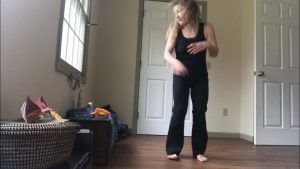 For the last two nights, I’ve slept on my back. This despite being a side-sleeper for pretty much my whole life. I have a certain way of tucking the pillow into the side of my neck, settling in, and nestling my back up to a pillow or another body. But my shoulders suffer, and the asymmetry sets me up for all kinds of misalignments. I’ve tried re-training myself many times, but I let myself go back to what’s comfortable when sleep has eluded me. This time, I think I’m on track to finally interrupt this persistent habit.
Yesterday, I logged into a zoom class that a friend led. I love his facilitation style, but I just couldn’t get into it this time. I was already feeling shut-down and discouraged, possibly because of many coronavirus deaths in my work community. Then, during the afternoon something I said contributed to disequilibrium in a whatsapp group. I apologized, but it was too late. I wasn’t wrong, exactly, but it really wasn’t my business. I wished I had stayed quiet or been more supportive. Even my ten-year-old son, Simon, felt I was in the wrong.
For a minute, I started to make a case against the person, but that fell apart pretty quickly. Then I started to make a case against myself. How I’m a bad person, how no one really likes me anyway. I started to visit past experiences, focusing on my many regrets. And I thought about all the recent emails I’ve sent that haven’t been answered, seeing it as a sign that I’m not really included or approved of, totally disregarding the fact that many people are grieving, or intolerably stressed, or have their hands overfull and answering their emails isn’t a top priority.
I really wanted to quit the group. They probably don’t want me anyway, I reasoned. But I made a recent resolution to be more present and available in group friendships–something I have struggled with–and I decided to stick it out for awhile.
In Flowing, I rolled and stretched on the floor, keeping as much of me touching the ground as possible as I curled and flipped over, at times rolling over the back of my skull or laying flat, arms and legs outstretched, on my belly or back. On my feet, I let my arms gently follow and rub against the rest of me. I let my weight down into one foot at a time, seeing if I could connect with the center of the earth. During all of this, I was also thinking about feeling left out at work, and how to approach some of my tasks. These kinds of thought processes continued into Staccato, though I could see the pattern my mind was insisting on. In Chaos, I was more energetic, but still felt lackluster in terms of engagement. Lyrical found me briefly disengaged from persistent thinking, but still uninspired. I disconnected from the session as we moved into Stillness, and made a video for the students I teach.
The video was about how our habitual fear stories can build up and cause us to feel overwhelmed, and how it is important that we learn to cut through our thoughts by coming back to the present when we start to make a case against ourselves.
In the evening, I avoided the temptation to drink wine to have a break from the difficult feelings I was experiencing. Instead, I wrote, then meditated at length, wrapped in a blanket in a dark room, lit only by one candle from my altar. I watched related thoughts arise and fall away, still making a case against myself, still feeling shut down, but gaining a little distance, and was able to sleep peacefully.
Today, things felt a little easier.
Again, I was drawn into exchanges with the same whatsapp group, but I didn’t feel disliked or disincluded. In fact, I found the people who contributed very supportive and receptive. I shared that I had been tempted to quit the group, but decided to ride it out. In the past, I’ve been inclined to shut down quickly in group relationships, but this time I wanted to try something different. I’m curious to see where it will lead, and excited about another strong community to learn from and grow with.
My biggest block in practice yesterday was in Staccato, but today I felt more connected as I joined a group of close friends on a zoom dance.
The livestream class was very clear and direct, with the teacher naming each form of each rhythm as it arose. In Flowing, I spent some time creating a perfect white circle around my home dance floor, and casting a circle spell. Then, I lost myself in weighted spins, following my intuition even if it didn’t look like typical flowing movements. The teacher offered a challenge that engaged me and I reflected that good teaching is a process of refining attention by offering hooks and challenges for students to engage with, and eventually supporting them to create refinements and challenges for themselves.
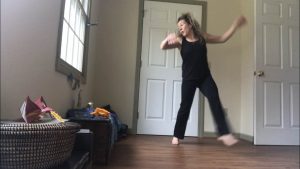 In Staccato, I found edges and definition, sinking low in a howling yoga-goddess-pose again and again. In Chaos, spin was my thread, and I followed coiling, moving like a matrix, and flapping my head wildly as the expression of the spine in perpetual motion. In Lyrical I noticed that different dancers were highlighted on the zoom screen, and I moved in partnership with that specific dancer, assuming they, too, were seeing me. In Stillness I moved into vast space, noting the movements of clouds, the many birds I could see from the window, and wondering about arcane languages.
After Stillness drew to a close, we came together in conversation. My newly-created zoom pattern is that I bail as soon as the music stops. Often Simon is drawing me, but it might also be that I’m uncomfortable in this kind of group friendship. Today I enjoyed the conversation, contributing and listening patiently.
Why might it be helpful to interrupt our persistent habits? In general, defaulting to our rehearsed patterns (and the mind-stories that support how we currently see ourselves) functions to keep up trapped in our small sense of self, and our painful, futile efforts to sustain our fragile ego. At this time, our patterns are rocked, and we have the choice to either dig in and insist on them, or to see them in the clear light of day and change our way of relating to them.
If there is any value to be gathered from this time–though any consideration of value in the face of such devastation is surely an expression of privilege–it is that it is an opportunity to confront and interrupt our habits, certainly on an individual level, and I hope, I pray, I intend, on a societal level, that we may establish new habits, new ways to share resources, and new ways to value our myriad contributions.
April 16, 2020, Broad Brook, Connecticut
